Five years ago, having a chatbot on your website was synonymous with innovation. Today, for many customers, it is synonymous with insufficiency.
Users in Miami, San Juan, Mexico City, or São Paulo do not want a machine to explain how to track an order. They want the machine to track it, identify the problem, and resolve it without them lifting a finger. That is the difference between a chatbot that answers and an AI agent that solves.
At V-Corp International, we follow these trends closely because we believe that companies in the Caribbean, Latin America, and the United States deserve to make informed technology decisions. This article is a guide to understanding what Agentic AI is, why it matters, and what infrastructure you need to be ready.
The definitive divorce: chatbots vs. AI agents
The confusion is common, but the distinction is brutal. A chatbot is an interpreter. An AI agent is an executor.
Chatbots operate within a predefined script. They can answer FAQs, redirect to a human, or at best collect data before a handoff. But when the customer says "my order has been held at customs for three days and I need it tomorrow for an event", the chatbot freezes. It has no context, no permissions, no capacity for action.
AI agents, on the other hand, operate with autonomy. They receive an objective, not an instruction. They can:
- Check the order status in the ERP
- Identify the bottleneck at customs
- Reclassify the shipment priority
- Notify the carrier
- Generate a new ETA
- Inform the customer with a compensatory discount
- And learn from that interaction for next time
All without human intervention. That is not automated customer service. That is autonomous operations.
The fuel: First-Party Data
No AI agent is better than the data it consumes. And this is where many companies stumble: they are feeding their models generic or third-party data, when the gold is in their own backyard.
First-Party Data —the data your customers generate directly through their interactions, purchases, browsing, and preferences— is the high-octane fuel for agentic AI. Because an agent that knows a customer's complete history does not just respond better; it anticipates.
Imagine an agent that:
- Knows your customer always buys the same product every 45 days
- Detects that this time they have not purchased
- Verifies there is limited stock
- Generates a personalized offer with free shipping
- And sends it via the customer's preferred channel (WhatsApp, email, SMS) at the time they historically open messages
That is not marketing. That is autonomous commercial relationship.
Where agentic AI is already changing the game
Logistics and supply chain
In the Caribbean, where a port delay can mean six-figure losses, AI agents are managing transportation routes in real time. They do not suggest alternatives: they execute them. They reschedule trucks, renegotiate port slots, and notify B2B customers before they even realize there is a problem.
Banking and fintech
Autonomous agents are processing transaction disputes, analyzing fraud patterns, and adjusting credit limits in milliseconds. A bank can now resolve a blocked card incident in 90 seconds, when it previously took 48 hours and three call transfers.
Hospitality and tourism
An agent managing reservations does not just confirm rooms. It reacts to flight cancellations by rescheduling stays, negotiating upgrades with the revenue management system, and sending updated itineraries to the guest, all while the human receptionist attends to whoever is physically at the front desk.
The infrastructure you need to be ready
Implementing agentic AI is not installing a plugin. It requires a solid data and automation architecture. These are the key components any organization must consider:
- Unified ingestion: An operational data lake connecting CRM, ERP, e-commerce, and legacy systems
- Scalable compute layer: Servers with processing capacity for AI inference and agent virtualization
- Programmable networks (SDN): Automated connectivity between branches, cloud, and data centers
- High-performance storage: For structured and unstructured data feeding the models
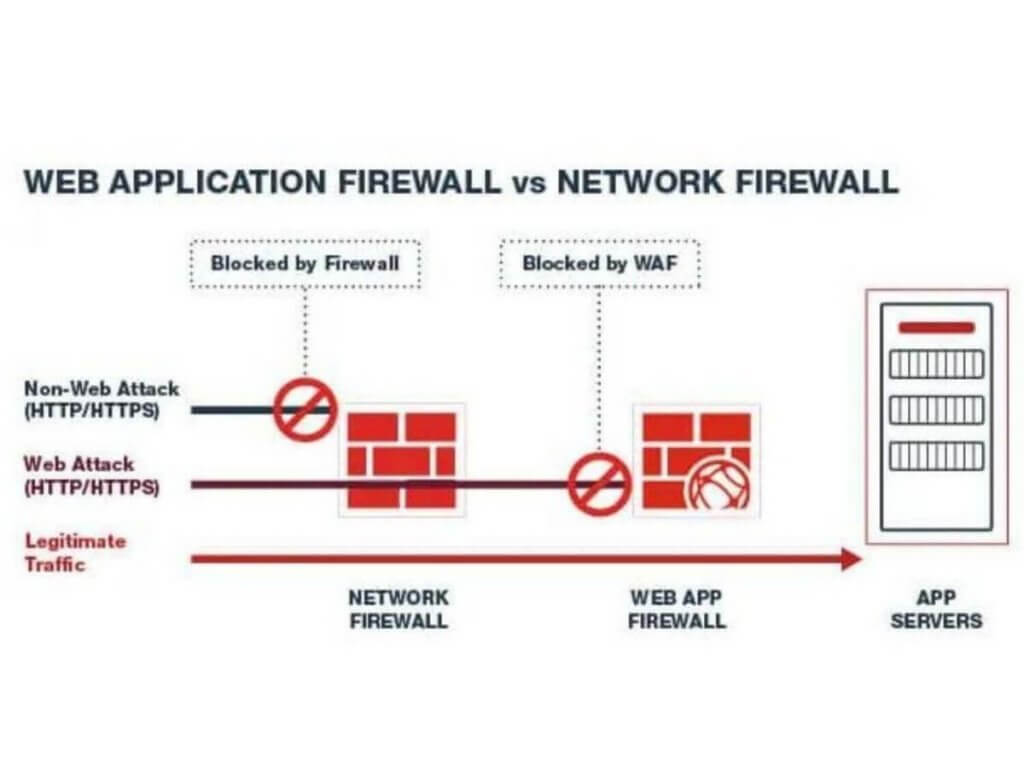
- Perimeter and application security: Protection of APIs and endpoints where AI agents operate
- Observability: Total visibility into what each agent is doing in real time
Why count on V-Corp International?
At V-Corp International, we do not just follow these trends; we study them so our clients and industry peers can make informed decisions. We understand that every company is at a different stage of its digital journey, and our mission is to be a reliable ally that helps you navigate this landscape.
We know that an agentic AI project in Puerto Rico has different connectivity constraints than one in Miami. We know that an offshore bank needs absolute regulatory traceability. And we know that a Caribbean hotel cannot depend 100% on public cloud. That is why, when we analyze these technologies, we do so thinking about your regional context.
If you are evaluating how to prepare your infrastructure for the era of autonomous agents, you can count on us as a technical and commercial ally. We are here to help you understand what you need, when you need it, and how it fits into your current operation.
Recommended equipment for your Agentic AI architecture
If you are planning to build or modernize your infrastructure to make the leap to Agentic AI, these are the components our technical team recommends and that you can find available in our online store:
🖥️ Dell PowerEdge R450 Servers — Enterprise compute for AI workloads and agent virtualization. Scalable processors and GPU-ready acceleration.
☁️ Nutanix NX Nodes — Hyperconverged infrastructure that unifies compute, storage, and virtualization in a single stack, ideal for deploying autonomous agent environments.
🌐 Juniper EX Series Switches — High-performance programmable networks to connect your agent ecosystem with low latency and high availability.
🔒 Fortinet FortiGate NGFW — Next-generation security to protect the endpoints and APIs where your AI agents operate, with integrated threat intelligence.
💾 HPE Alletra Storage — High-performance NVMe storage for data lakes and vector databases that feed the contextual memory of your agents.
📡 Ruckus Wireless Access Points — Enterprise Wi-Fi connectivity for distributed properties, ideal if your agents serve operations across multiple physical locations.
The future does not belong to those with the most chatbots. It belongs to those with the infrastructure to support agents that solve.
If you have questions about how these components fit into your current architecture, do not hesitate to contact us. At V-Corp International, we are here to help you make technology decisions with confidence.