
Cybersecurity in Caribbean businesses is not an IT department: it is the line of defense between survival and operational collapse in 2026. From San Juan to Port of Spain, SMEs, offshore banks, and hotel chains have invested in corporate antivirus and perimeter firewalls as their definitive shield against cyberattacks. The objective is clear: sleep peacefully knowing the network is protected.
But that investment has created a dangerous illusion, often fatal. The Caribbean company no longer just faces floppy disk viruses: it faces persistent threat actors, ransomware-as-a-service, and AI-driven targeted phishing campaigns. And that reality —measured in minutes from intrusion to total encryption— is where traditional cybersecurity simply cannot respond.
At V-Corp International, we work with organizations that operate under strict regulations such as FATCA, GDPR, and local data protection laws. We understand that cybersecurity is not a separate chapter from the business: it is the business. This article explains why the security architecture that worked in 2020 is insufficient in 2026, and what you need to close the gap before an attacker finds it first.
The Core Problem: The Illusion of Immunity

Many business infrastructures in the region still rely exclusively on signature-based antivirus and perimeter firewalls to secure their network. Tools like Norton Enterprise or McAfee Total Protection were excellent at what they did: detecting known malware, blocking unauthorized ports, and applying access policies.
The problem: modern cyberattacks don't use known malware. They use unknown, fileless, and living-off-the-land techniques.
When an advanced attacker penetrates your network, they are not launching an executable with a virus signature. They are using legitimate operating system tools (PowerShell, WMI, PsExec) to move laterally, escalate privileges, and exfiltrate data. For traditional antivirus, a PowerShell session executed by a legitimate administrator looks exactly the same as a PowerShell session hijacked by an attacker. The antivirus is blind to malicious behavior.
Attack Type What It Does Why Traditional Security Doesn't See It
Ransomware-as-a-Service (RaaS) Operators with no technical knowledge rent encryption kits by subscription Ransomware is polymorphic: changes signature every hour
AI-driven targeted phishing (spear phishing) Personalized emails impersonating the CEO or trusted supplier No malware attached: uses social engineering and stolen credentials
Living-off-the-Land (LotL) Uses native system tools (PowerShell, WMI) to attack Antivirus trusts binaries signed by Microsoft
Supply chain attack Compromises a software vendor to infect its customers Software is legitimate and digitally signed
Fileless malware Resides only in RAM memory, never touches disk No file to scan
APTs (Advanced Persistent Threats) Remain in the network for months before acting Generate no alerts: operate below detection threshold
For a perimeter firewall, an outbound HTTPS connection to a command-and-control (C2) server looks exactly the same as a legitimate HTTPS connection to Google Drive. Both use port 443, both are encrypted, both respect TLS certificates. The firewall is blind to malicious content.
The New Reality: The Caribbean as a Priority Target

The Caribbean faces an accelerated cyber risk situation. According to the FBI Internet Crime Report 2025, losses from cybercrime in the region increased by 340% between 2020 and 2025. Caribbean businesses are attractive targets for three converging reasons:
-
Offshore banks: Large capital volumes with less aggressive regulators than the US or Europe
-
Digital tourism: Hotel chains with credit card data from millions of tourists
-
Aging infrastructure: Legacy systems (Windows Server 2008, SQL Server 2012) without security patches
And every breach —whether ransomware paralyzing a hospital or phishing emptying a bank account— has an exponential cost:
-
Global average breach cost: $4.88 million USD (IBM Cost of Data Breach Report 2025)
-
Average time to detect an intrusion: 277 days
-
Average time to contain it: Once detected, an additional 75 days
-
Businesses that close after severe ransomware: 60% within the first 6 months
In the Caribbean, where cyber insurance is still incipient and recovery funds are limited, a successful cyberattack is not just technical: it is existential for the business.
The Solution: Defense in Depth with EDR, XDR, and Zero Trust

If the traditional firewall is the guard at the building entrance, defense in depth is the counterintelligence team that monitors every movement inside the building, understands intentions, and neutralizes threats the guard could never identify.
Modern cybersecurity does not replace the firewall: it complements it at the layers the firewall cannot reach. A defense-in-depth architecture for Caribbean businesses includes:
1. EDR (Endpoint Detection and Response)
The first rule of modern cybersecurity is: you cannot protect what you cannot see. Companies typically have between 40% and 60% of unmonitored endpoints: remote employee laptops, legacy servers, IoT devices connected to the guest network.
EDR:
-
Monitors every process, network connection, and registry modification in real time
-
Uses artificial intelligence to detect anomalous behaviors (not just malware signatures)
-
Responds automatically: isolates the endpoint, kills the process, reverts changes
-
Provides forensic visibility: what the attacker did, when, and how they moved
2. XDR (Extended Detection and Response)
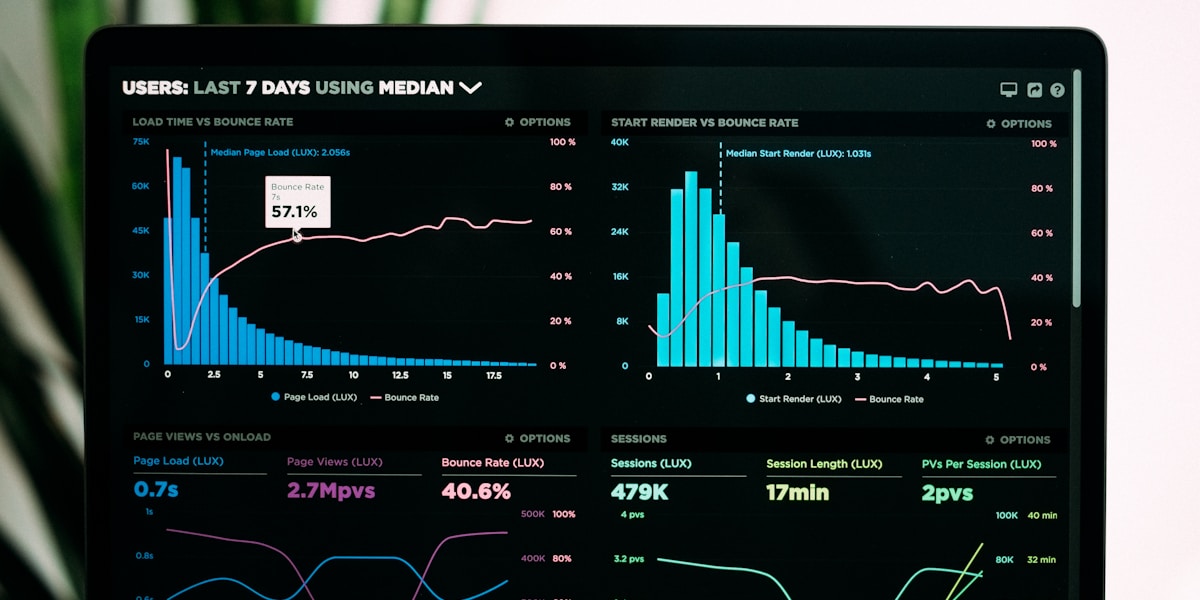
Splunk and SentinelOne manufacture XDR platforms that correlate data across the entire infrastructure:
-
Endpoints: EDR on laptops, servers, VMs
-
Network: Firewall, DNS, web proxy logs
-
Email: Phishing detection, attachment analysis
-
Cloud: AWS, Azure, Google Cloud
-
Identity: Active Directory, Azure AD, Okta
Critically for the Caribbean enterprise: XDR does not generate 10,000 alerts per day that no one reviews. It uses AI to prioritize: it shows you the 5 threats that really matter, with complete context of how they propagated and what they touched.
3. Zero Trust Architecture (ZTA)
Zero Trust Principle Implementation What It Eliminates
Never trust, always verify Multi-factor authentication (MFA) on every access Credentials stolen by phishing
Least privilege access Users can only see what they need for their job Lateral movement by attackers
Microsegmentation Network is divided into zones with internal firewalls Ransomware propagation
Continuous verification System reevaluates trust every 15 minutes Hijacked sessions
Assume breach Monitoring and response assume the perimeter already fell False sense of security
4. SOC-as-a-Service (Security Operations Center)
Caribbean businesses face a critical shortage of cyber talent. A senior security analyst costs $120,000+ USD annually —beyond the reach of most SMEs. SOC-as-a-Service:
-
Provides a team of analysts 24/7/365 at a fraction of the cost
-
Investigates alerts, proactively hunts threats, responds to incidents
-
Maintains updated playbooks against the latest attack techniques
-
Generates compliance reports for auditors and regulators
Recommended Architecture for Caribbean Businesses
A modern cybersecurity architecture for a company in the Caribbean should operate in complementary layers:
Layer Function Technology What It Protects
Layer 1: Identity Access control, MFA, privilege management Azure AD, Okta, Duo Compromised credentials, unauthorized access
Layer 2: Endpoint Detection and response on devices EDR (CrowdStrike, SentinelOne) Malware, ransomware, lateral movement
Layer 3: Network Segmentation, traffic monitoring NGFW, NDR (Darktrace) Data exfiltration, C2 beaconing
Layer 4: Application API and web application protection WAAP (F5, Barracuda) BOLA, injection, behavioral anomalies
Layer 5: Data Encryption, DLP, tokenization Microsoft Purview, Varonis PII, financial data, intellectual property
Layer 6: Visibility Correlation, prioritization, response XDR (Splunk, SentinelOne) APTs, persistent threats, insider threats
The golden rule: never trust a single layer. Identity protects access. Endpoint protects devices. Network protects traffic. Application protects logic. Data assumes everything above could fail. And XDR sees what no individual layer can see.
The ROI of Prevention vs. Reaction
The Numbers Don't Lie
Item Reactive Scenario (After Incident) Proactive Scenario (Prevention)
Ransom payment $250,000 USD —
Data and systems recovery $180,000 USD —
Revenue loss from downtime $120,000 USD —
Reputation damage and customer loss $95,000 USD —
Regulatory and legal costs $65,000 USD —
EDR + XDR + Zero Trust — $85,000 USD
SOC-as-a-Service (24/7) — $48,000 USD
Training and simulations — $12,000 USD
TOTAL $710,000 USD $145,000 USD
$565,000 USD in savings per avoided incident — a 79% reduction in total impact.
For an average Caribbean business, the investment in proactive cybersecurity pays for itself if it prevents a single severe ransomware attack. After that, every month that passes without a breach is value generated, not just cost avoided.
Compliance and Trust: What Is at Stake
For an offshore bank in the Bahamas or a hotel chain in Punta Cana, a cybersecurity breach doesn't just mean a fine. It means:
-
Loss of banking license in offshore jurisdictions
-
Regulatory notification requirements that damage reputation before the market reacts
-
Forensic and legal costs that can reach millions of dollars
-
Loss of international correspondent banks, the true asset of an offshore bank
-
Mass cancellations of hotel reservations after a credit card data leak
Investment in modern cybersecurity is not an IT expense: it is a regulatory and reputational continuity insurance policy.
Why Count on V-Corp International?
At V-Corp International, we understand Caribbean cyber architecture because we study its regulators, its risks, and its technical limitations. We do not propose generic solutions: we propose security layers that respect the operational reality of an institution with a cautious budget, a small but specialized technical team, and clients who demand security comparable to London or New York.
Our approach is educational and consultative. We help you understand:
-
What assets you have exposed (even those you don't know exist)
-
Where your current traditional security stops protecting you
-
What EDR/XDR solution fits your architecture without rewriting applications
-
How to demonstrate compliance to auditors and regulators
🛡️ Is your organization truly protected against modern cyberattacks?
In the Caribbean business sector, a single security breach can lead to severe regulatory sanctions, loss of customer trust, and irreparable reputational damage. Do not trust generic automated forms: speak directly with our senior cybersecurity architects.
Schedule a Complimentary 15-Minute Architectural Review. Our engineering team will analyze your current security posture and provide you with 3 immediate, actionable steps to strengthen your digital perimeter.