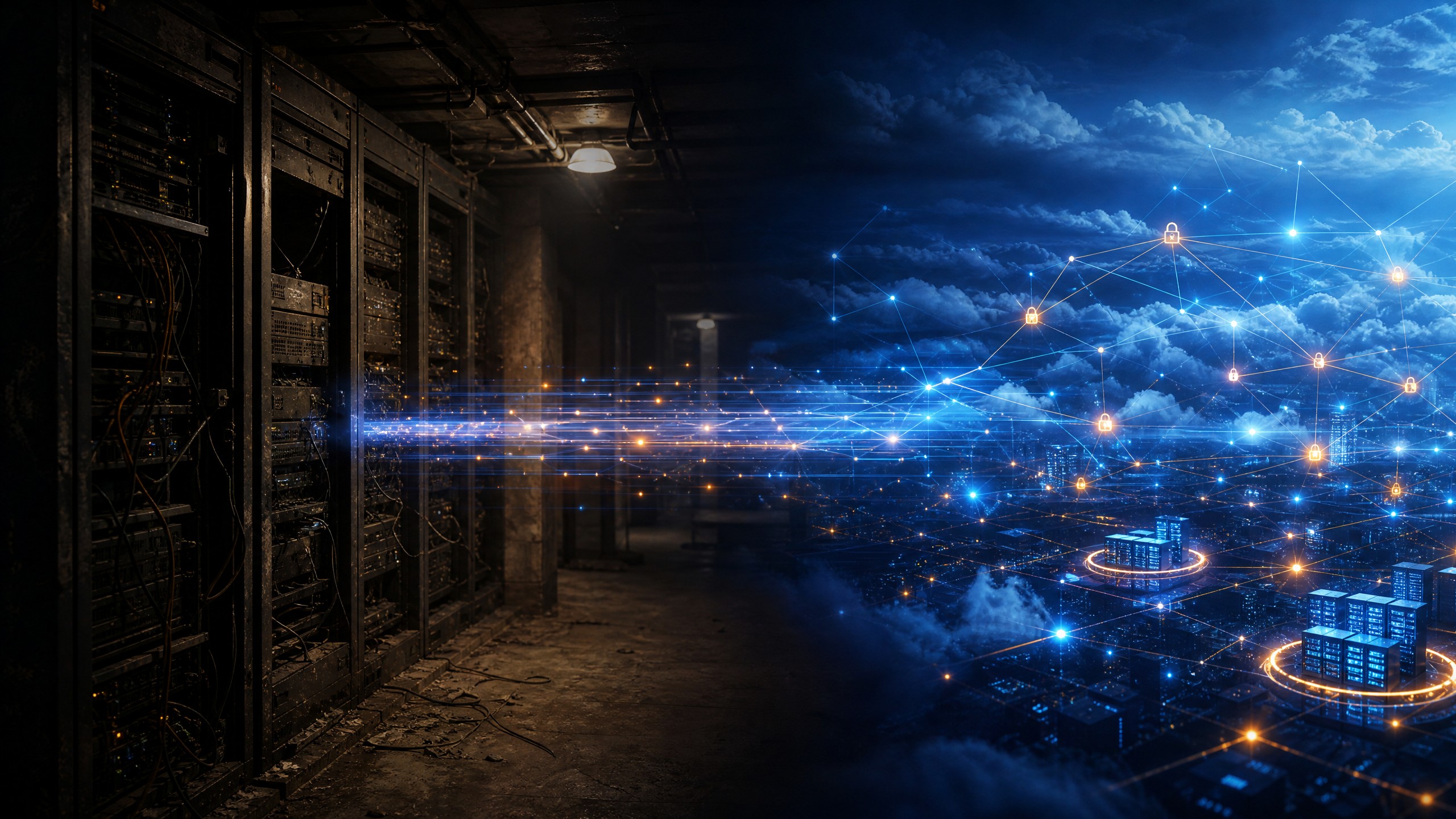
Resilience Isn't Bought in Boxes: Why Caribbean Banks Are Fleeing the "Basement Server" Trap
For decades, the standard playbook for banking stability followed a predictable, capital-heavy ritual: authorize a massive CapEx spend, stack hardware in a climate-controlled basement, and guard it like a fortress. In 2026, that model isn't just obsolete - it is an active operational and financial risk.
The False Comfort of Physical Infrastructure
For a long time, having "boxes in the basement" provided a misleading sense of security. Executive boards felt protected simply because they could physically see the infrastructure they owned. But ownership of depreciating hardware is not the same as ownership of resilience.
In critical infrastructure sectors like banking and finance across Latin America and the Caribbean, true operational resilience is an ongoing ecosystem - not a one-time purchase to be depreciated over five years.
"The question is no longer whether your institution will face a disruption. The question is whether your architecture will survive it."
The Triple Threat to Legacy Hardware in the Caribbean
Caribbean financial institutions face a unique set of geographic and technological bottlenecks that legacy, on-premises hardware was never designed to handle:
{/* ---- SVG CHART 1: Triple Threat Risk Radar ---- */}
THE TRIPLE THREAT TO LEGACY BANKING INFRASTRUCTURE 🌐 PUBLIC INTERNET LIABILITY
Routing core transactional data over open public channels exposes institutions to state-sponsored interception and massive volumetric DDoS attacks. 🌊 SUBSEA CABLE VULNERABILITY
A single undersea fiber-optic cut can isolate an entire island's banking infrastructure. Manual failover with shared failure points means catastrophic downtime. 🔒 RANSOMWARE REALITY
Modern ransomware actively hunts local backup appliances on the same network domain. Static hardware lacks the dynamic, immutable isolation required to protect data. The three structural vulnerabilities of legacy on-premises banking infrastructure in the Caribbean region. When systems fail under this outdated model, a chaotic multi-vendor blame game begins: the telecom provider blames the security appliance vendor, the security team blames the backup software provider - and the bank remains offline, facing thousands of dollars in regulatory fines per minute and severe reputational damage.
According to the IBM Cost of a Data Breach Report 2024, the global average cost of a data breach reached $4.88 million USD - a record high. For financial institutions in developing economies, the reputational fallout can be exponentially more damaging.
Shift Your Strategy: From Asset Ownership to Financial Resilience-as-a-Service (FRaaS)
To survive and thrive under strict new regulatory oversight - including guidelines from the Basel Committee on Banking Supervision and local central bank frameworks - the C-Suite must shift its perspective: from owning depreciating assets to subscribing to guaranteed business outcomes.
This is the exact thesis behind V-Corp International's Financial Resilience-as-a-Service (FRaaS) framework - an elite, unified ecosystem that merges:
-
🔷 Private network backbone - Eliminating public internet dependency for critical data flows
-
🛡️ F5 Advanced WAF - Real-time protection for digital banking channels and mobile APIs
-
💾 Veeam Data Platform - Automated, immutable backup and one-click disaster recovery orchestration
All delivered in a 100% OpEx monthly subscription model - zero upfront capital required.
{/* ---- SVG CHART 2: CapEx vs OpEx Model Comparison ---- */}
CAPEX LEGACY MODEL vs. FRAAS SUBSCRIPTION (5-YEAR TCO VIEW) $500K $400K $300K $200K $100K Year 1 Year 2 Year 3 Year 4 Year 5 Legacy CapEx Model (unpredictable spikes) FRaaS OpEx Model (flat, predictable) Illustrative 5-year Total Cost of Ownership: Legacy CapEx spikes (hardware refresh cycles) vs. FRaaS flat monthly OpEx. Actual figures vary by institution size and scope.
What Forward-Thinking Banks Are Subscribing To
Instead of accumulating boxes, resilient Caribbean banks are now operating on a managed architecture with three core principles:
🛣️ The Highway is Invisible
Backup replicas and application traffic no longer touch the public internet. They move through dedicated private multi-cloud connections or hybrid SD-WAN networks that combine subsea fiber with low-latency LEO satellites. If a cable snaps, the network reroutes in milliseconds - completely transparently. Learn more about resilient network design from Cisco's SD-WAN documentation.
🛡️ The Shield is Smart
Digital channels and mobile banking APIs are monitored in real time by advanced Web Application Firewalls (WAF) that stop credential stuffing and fraud before they reach the data center core. The OWASP Top 10 provides the global benchmark framework for these threats.
🤖 The Recovery is Automated
Data is stored in immutable repositories that cannot be modified or deleted by ransomware. Disaster recovery plans (DRP) are no longer theoretical PDF documents - they are orchestrated to execute at the push of a single button, generating automated compliance reports for central bank auditors. The Veeam 2024 Data Protection Trends Report confirms that organizations with automated recovery cut downtime by up to 79% compared to manual processes.
The Bottom Line: Protecting Cash Flow While Boosting Resilience
The most compelling argument for the CEO and CFO isn't just technical - it's financial.
{/* ---- SVG CHART 3: Key Metrics Comparison ---- */}
KEY METRICS: LEGACY INFRASTRUCTURE vs. FRAAS MODEL METRIC LEGACY MODEL FRaaS MODEL Initial Investment $250K-$800K CapEx $0 CapEx / Monthly OpEx Recovery Time Objective (RTO) Hours to Days Minutes (Automated) Ransomware Protection Vulnerable (mutable backups) Immutable repositories Regulatory Compliance Reports Manual / Periodic Automated & Continuous Scalability Fixed / Refresh cycles Elastic / On-demand Comparative overview of operational and financial metrics between legacy on-premises infrastructure and V-Corp's FRaaS model. Transitioning to a subscription-based resilience model completely eliminates the need for massive upfront capital allocations. The institution sheds the overhead of hardware maintenance, emergency patching, and specialized in-house infrastructure engineering.
Instead, the bank pays a predictable, fully deductible monthly operational fee that scales dynamically with actual workload volume and data growth.
The Gartner 2025 Technology Trends for Banking consistently highlights OpEx-based cloud infrastructure as the dominant model for financial institutions achieving the highest operational resilience scores.
It's Time to Leave the Basement
In 2026, the metrics that define a successful banking institution are no longer the size of its server room or the weight of its physical assets. Success is measured by:
-
✅ Uptime - guaranteed SLAs, not hopeful hardware
-
✅ Data integrity - immutable, auditable, always recoverable
-
✅ Regulatory compliance - automated, real-time, audit-ready
-
✅ Ability to pivot under stress - whether it's a hurricane, a ransomware attack, or a subsea cable cut
Stop buying boxes that begin to depreciate the moment they are unboxed. It's time to move your critical infrastructure out of the basement and elevate your bank into a continuous state of readiness.
🏦 Is Your Institution Ready for the Modern Caribbean Threat Landscape?
Contact V-Corp International today to schedule a confidential, 45-minute Financial Resilience Assessment and discover your real operational recovery time.