Digital transformation in Caribbean financial institutions is not a future promise: it is the operational reality of 2026. From Puerto Rico to the Bahamas, offshore and commercial banks have deployed mobile applications, open banking platforms, and third-party fintech integrations. The objective is clear: more agility, better customer experience, new revenue channels.
But that acceleration has created a massive, often invisible security gap. Caribbean banking no longer just protects networks: it protects interfaces. And those interfaces —REST APIs, GraphQL, webhooks— are the new battlefield where traditional firewalls simply cannot see.
At V-Corp International, we work with financial institutions operating under strict regulations like FATCA, GDPR, and local central bank standards. We understand that security is not a separate chapter from business: it is the business. This article explains why the security architecture that worked in 2020 is insufficient in 2026, and what you need to close the gap.
The core problem: the Layer 7 blind spot
Many banking infrastructures in the region still rely heavily on Next-Generation Firewalls (NGFW) to secure their perimeter. Tools like Fortinet FortiGate or Palo Alto Networks are excellent at what they do: blocking unauthorized network access, inspecting packets at OSI Layers 3 and 4, and applying segmentation policies.
The problem: APIs do not live in Layer 3. They live in Layer 7.
When an attacker exploits a banking API, they are not trying to "enter" the network. They are already inside, or worse: interacting with the application as a legitimate user. The most dangerous Layer 7 exploits for modern banking include:
Attack Type What it does Why the NGFW cannot see it
BOLA (Broken Object Level Authorization) Allows a user to access ANOTHER user's data by changing an ID in the URL The HTTP request appears legitimate; the firewall sees a valid URL
NoSQL/SQL Injection Inserts malicious code in form fields or JSON to extract databases The payload travels inside an "secure" HTTPS connection
SSRF (Server-Side Request Forgery) Tricks the server into making requests to internal systems The request origin is trusted (your own server)
JWT/Token Manipulation Modifies authentication tokens to escalate privileges The token has valid format; the firewall does not validate cryptographic signature
Shadow/Deprecated API Forgotten or undocumented APIs still exposed and unprotected The firewall does not know what APIs exist; it only sees incoming traffic
To a standard firewall, a malicious request to /api/v2/accounts/12345/transfer with a stolen token looks exactly like a legitimate request. Both use HTTPS, both come from an authorized IP, both respect allowed ports. The NGFW is blind to the logical content.
The new reality: open banking and the expanded attack surface
Open banking —driven by global regulations and progressively adopted in emerging markets— forces financial institutions to expose APIs to third parties: fintechs, data aggregators, payment platforms. Every integration is a new door.
And every door needs specific vigilance:
OAuth 2.0 and MFA are no longer sufficient if the underlying API has BOLA
Basic rate limiting does not detect an attacker stealing data slowly (low-and-slow)
Generic WAFs do not understand the business logic of a SWIFT transfer vs. a balance inquiry
In the Caribbean, where data protection regulations increasingly align with European (GDPR) and US standards (CCPA/GLBA for entities with US ties), an API breach is not just technical: it is regulatory and reputational.
The solution: WAAP (Web Application and API Protection)
If the NGFW is the building's door guard, WAAP is the security expert who reviews every document that enters, understands its content, and detects forgeries the guard could never identify.
WAAP does not replace the firewall: it complements it at the layer the firewall cannot reach. A modern banking WAAP architecture includes:
1. Continuous API Discovery
The first rule of API security is: you cannot protect what you do not know. Banks typically have 30% to 50% more exposed APIs than their security teams believe. Deprecated APIs, forgotten development endpoints, accidentally exposed internal microservices.
WAAP solutions continuously scan traffic to identify:
Documented and undocumented APIs (shadow APIs)
Obsolete versions still responding
Endpoints exposing sensitive data (PII, account numbers, SSNs)
Changes in API structure indicating unauthorized deployments
2. Behavioral AI Protection (F5 Advanced WAF / Barracuda WAF)
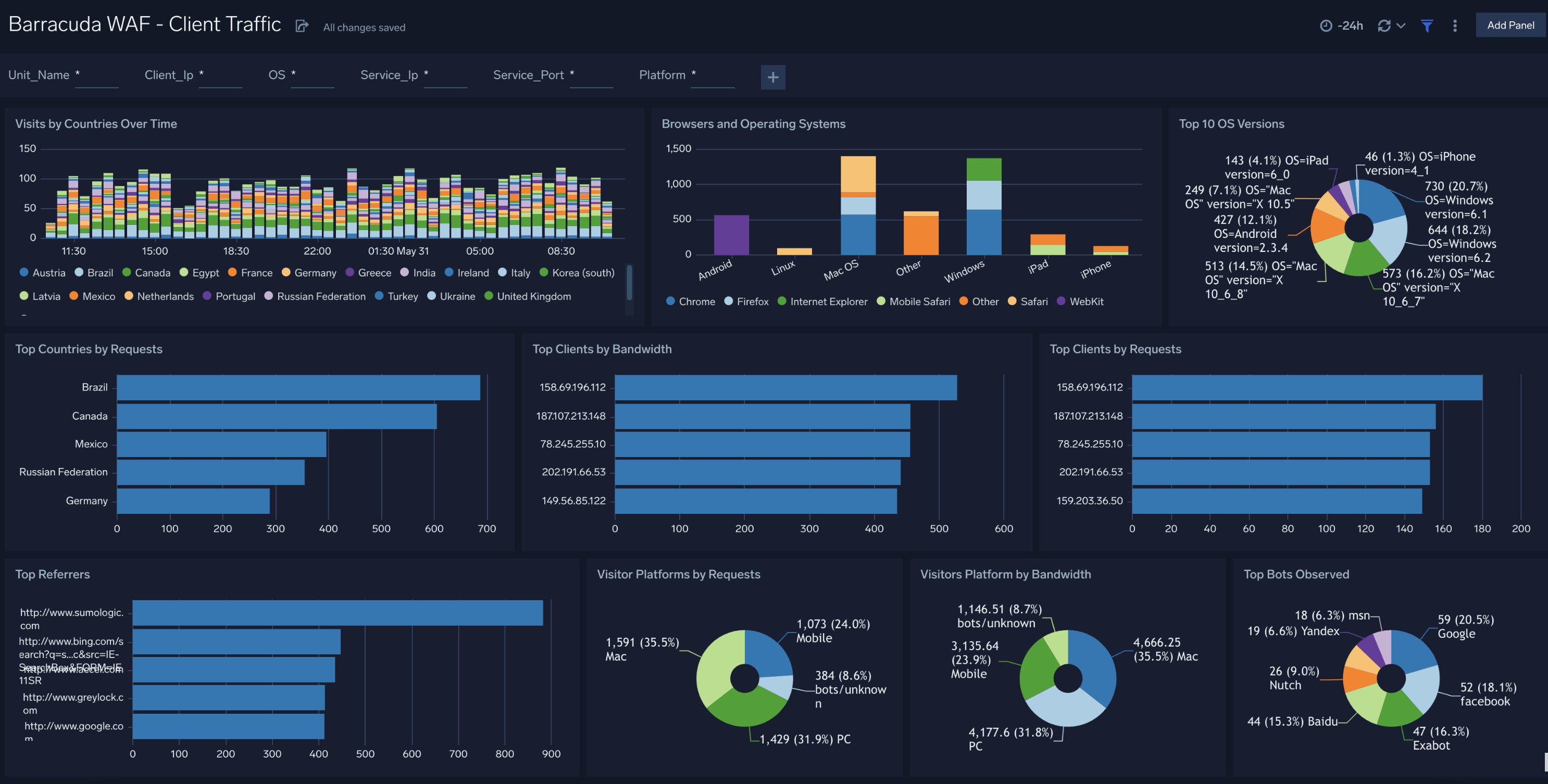
F5 Advanced WAF and Barracuda Web Application Firewall use machine learning to establish a baseline of normal behavior for each API:
Which legitimate users request which endpoints
In what sequence
With what frequency
With what typical payloads
When a request deviates from that baseline —for example, a user who has never accessed /api/admin suddenly attempts to list all accounts— the WAAP blocks in milliseconds, before the request reaches the application.
Critically for banking: this protection operates without introducing perceptible latency to the end user. Mobile customers do not notice the inspection; attackers do.
3. Layer 7 Specific Mitigation
Attack WAAP Mitigation
BOLA / IDOR Per-endpoint authorization validation, verifying the authenticated user can access the requested object
NoSQL/SQL Injection Semantic inspection of JSON/XML payloads, injection pattern detection
SSRF Output URL validation, whitelist of allowed destinations
Manipulated JWT Cryptographic signature validation, claims verification (issuer, audience, expiration)
Intelligent rate limiting Dynamic limits per user, per endpoint, per historical behavior
Recommended architecture for Caribbean banking
A modern security architecture for a Caribbean financial institution should operate in complementary layers:
Layer Function Technology What it protects
Layer 1: Network Perimeter Access control, IPS, VPN NGFW (Fortinet, Palo Alto) Unauthorized traffic at Layers 3-4
Layer 2: Application & API Layer 7 inspection, API protection WAAP (F5, Barracuda) BOLA, injection, behavioral anomalies, shadow APIs
Layer 3: Banking Application Business logic, REST/GraphQL APIs Microservices, API Gateway Authorized access, internal rate limiting
Layer 4: Data Storage, tokenization, encryption Databases, HSM, KMS PII, account numbers, credentials, tokens
The golden rule: never trust a single layer. The NGFW protects the network. The WAAP protects the logic. The application protects its own data. And the data layer assumes everything above could fail.
Compliance and trust: what is at stake
For an offshore bank in the Bahamas or a commercial bank in Puerto Rico, an API breach does not just mean a fine. It means:
Loss of banking license in offshore jurisdictions
Regulatory notification requirements that damage reputation before the market reacts
Forensic costs that can reach millions of dollars
Loss of international correspondent banks, the true asset of an offshore bank
WAAP investment is not a security expense: it is regulatory continuity insurance.
Why count on V-Corp International?
At V-Corp International, we understand Caribbean banking architecture because we study its regulators, its risks, and its technical limitations. We do not propose generic solutions: we propose security layers that respect operational reality — an institution with cautious budgets, specialized but small technical teams, and customers demanding digital experience comparable to London or New York.
Our approach is educational and consultative. We help you understand:
What APIs you have exposed (including those you do not know exist)
Where your current NGFW stops protecting you
Which WAAP solution fits your architecture without rewriting applications
How to demonstrate compliance to auditors and regulators
Recommended equipment for your WAAP architecture
If you are evaluating how to close the Layer 7 gap in your financial institution, these are the components our technical team recommends and that you can find available in our online store:
🛡️ F5 BIG-IP Advanced WAF — Application protection with machine learning, defense against sophisticated bots, and API protection with automatic endpoint discovery.
🛡️ Barracuda Web Application Firewall — Flexible deployment WAF (hardware, virtual, or cloud) with OWASP Top 10 protection, application DDoS defense, and granular access control.
🔒 Fortinet FortiGate NGFW — Next-generation firewall for the network perimeter layer, with integrated threat intelligence and zero trust segmentation.
🔒 F5 Distributed Cloud WAAP — Cloud-native solution for API and application protection geographically distributed, ideal for banks with clients across multiple islands.
📊 HPE Alletra / Dell PowerStore — High-performance storage for security logs, forensic analysis, and authentication token databases.
🏦 Is your financial infrastructure fully protected against targeted Layer 7 exploits?
In the banking sector, a single API vulnerability can lead to severe regulatory penalties and loss of customer trust. Skip the generic automated forms and speak directly with our senior infrastructure architects.
Schedule a complimentary 15-Minute Architectural Review. Our engineering team will analyze your current API edge posture and provide 3 immediate, actionable steps to reinforce your perimeter.