
The Illusion of Security in Multicloud Environments
As Banking, Financial, and Healthcare organizations in Latin America and the Caribbean shift toward hybrid cloud models, a false sense of security often takes hold. It is frequently assumed that hiring world-class cloud providers like AWS, Azure, or Google Cloud automatically guarantees an airtight infrastructure. This is one of the most dangerous beliefs in modern cybersecurity.
What Is the Shared Responsibility Model, Really?
Cloud providers guarantee security OF the cloud (physical infrastructure, network, virtualization). But security IN the cloud —configurations, permissions, data, encryption, access policies— remains 100% the customer's responsibility. This means a misconfigured S3 bucket, an overly permissive IAM policy, or an exposed API key are exclusively the client's responsibility, not the provider's.
The core challenge isn't a lack of firewalls or antivirus; it is the breakneck speed of cloud deployments. In an environment where DevOps teams push updates multiple times a day, yesterday's secure configurations can become today's critical vulnerabilities. An accidentally public storage bucket, an API key hardcoded into a container, or an overly permissive access policy are all it takes to trigger a breach without raising a single traditional alarm.
Industry Insight: According to guidelines from the NIST Special Publication 800-210, managing multi-cloud ecosystems significantly increases access policy inconsistencies and expands the overall attack surface.
The Impact of Invisible Misconfigurations
When an IT team manages resources spread across AWS, Azure, or private environments, visibility fragments like a puzzle whose pieces never quite fit. This gives rise to three recurring vulnerabilities that act as silent backdoors:
1. Over-privileged Identities
Imagine hiring a temporary consultant for a data migration and granting them administrator permissions. The project ends, the consultant leaves, but their credentials were never revoked. That account remains active, with full access, waiting to be discovered by an attacker. Shadow permissions are identities —users, service accounts, roles— that accumulate privileges over time and are never purged. Secrails automatically identifies which permissions were granted versus which are actually used, enabling true least-privilege enforcement without guesswork.
2. Exposed Test Endpoints
A development team temporarily opens a test server to the Internet to validate an integration with an external partner. The test works, everyone celebrates, but no one closes public access. That server, without updated patches, becomes an easy target. Exposed endpoints are resources that were never meant to be public and that time has turned into forgotten liabilities.
3. Compliance Drift
Infrastructure is born secure: it complies with ISO 27017, has encryption enabled, logs are centralized. But with every emergency manual change —"just this once"— the configuration imperceptibly drifts from the desired state. After six months, the actual infrastructure no longer resembles what was documented. Compliance drift is the silent gap between what you think you have and what actually exists in production.
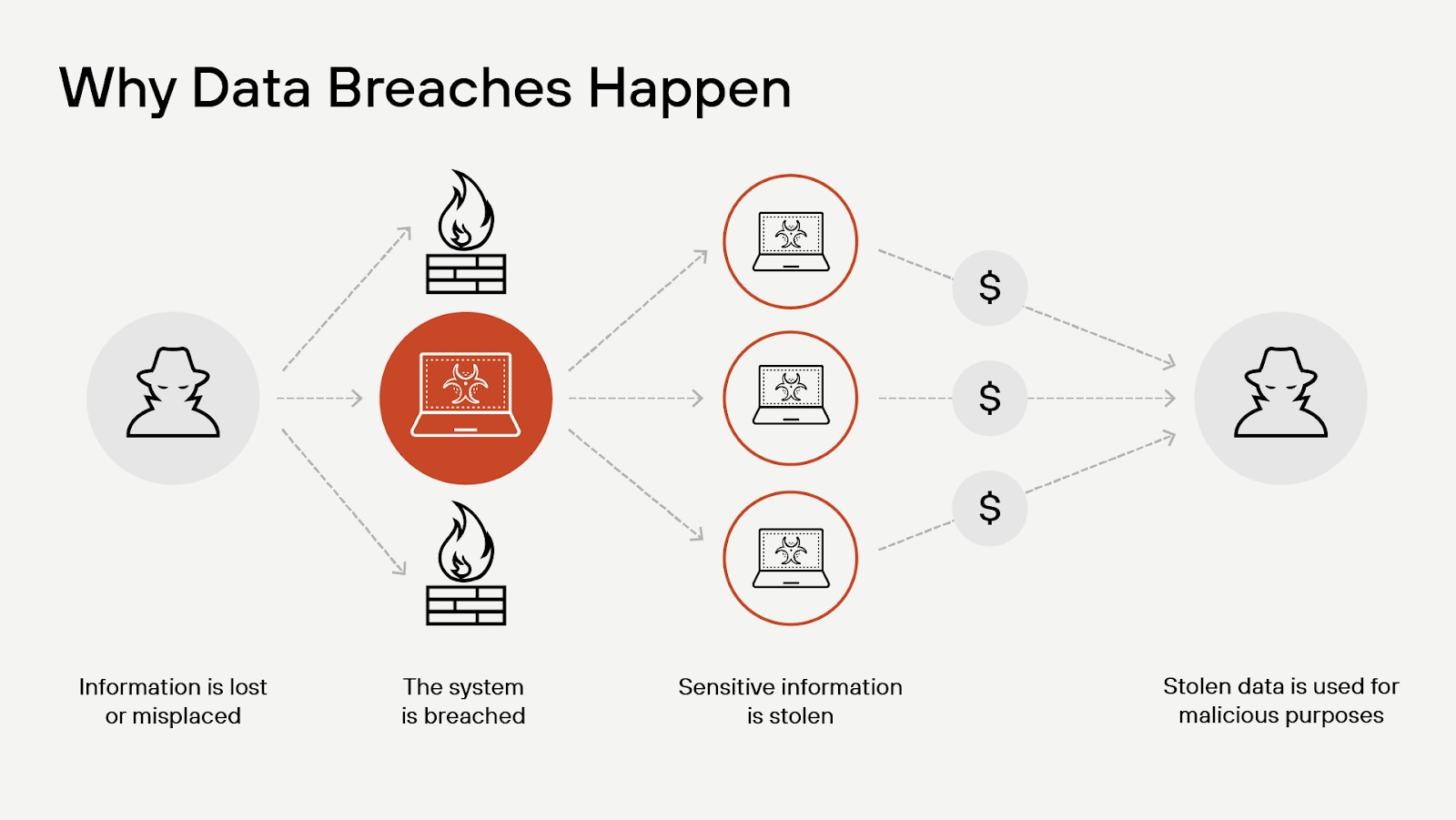
Conventional monitoring tools evaluate traffic, not posture. A firewall can detect a DDoS attack, but it will never tell you that an S3 bucket has been exposed to the Internet for three months. Without continuous configuration analysis, cybersecurity teams are effectively blind to the underlying structure of their environment.
What Is Secrails and How Does It Transform Cloud Governance?
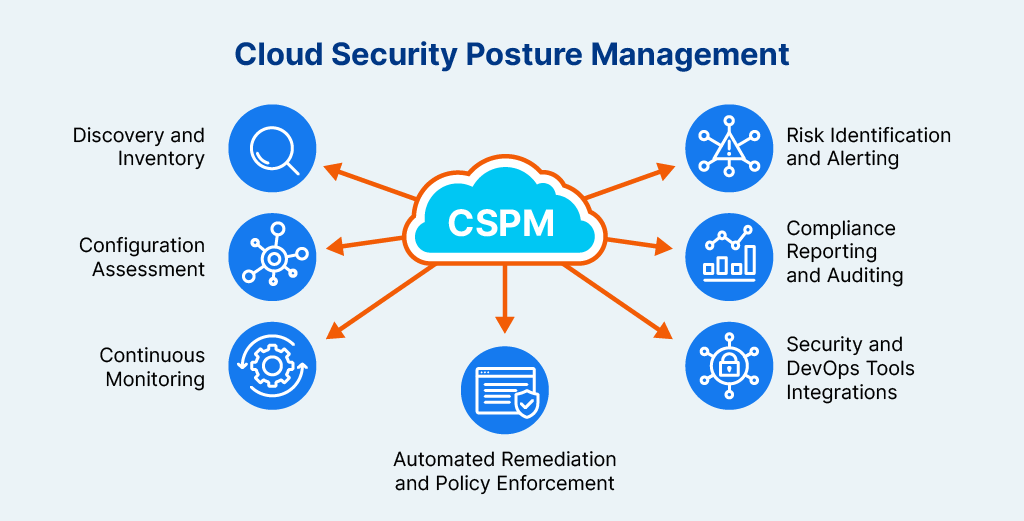
Secrails is a Cloud Security Posture Management (CSPM) platform designed to eliminate the chaos of multicloud visibility. But it's not just about "seeing more": it's about understanding the real risk of every configuration, permission, and resource in your infrastructure.
What Does CSPM Really Mean?
Cloud Security Posture Management (CSPM) is the discipline of continuously evaluating your cloud infrastructure against predefined security policies, compliance standards, and industry best practices. Unlike a one-time scan, CSPM operates as a permanent security radar: it discovers, assesses, alerts, and guides remediation in real time.
Secrails' Three Differentiating Capabilities
To eradicate the blind spots we mentioned, at V-Corp International we integrate Secrails as the cornerstone of our continuous governance offering. These are the capabilities that make the difference:
🔍 Automated Asset Mapping Secrails discovers in real time every resource deployed in your cloud: virtual machines, buckets, databases, serverless functions, containers, networks, and more. This eliminates Shadow IT —those resources deployed by a team without the security department's knowledge. Did you know that 30% of security breaches originate from assets the organization didn't even know existed?
👤 Identity Risk Assessment Secrails deeply analyzes actual permissions versus used permissions. If a role has 50 permissions but only uses 3, the platform detects it and suggests an optimal least-privilege policy. This not only reduces the attack surface: it prevents lateral movement by attackers who, upon compromising an account, seek to escalate privileges to access critical resources.
🛠️ Guided and Prioritized Remediation Not all vulnerabilities are equal. Secrails classifies each finding according to its direct business impact, not just its technical severity. A production database with public access receives higher priority than a test bucket with synthetic data. Additionally, it provides clear remediation steps, avoiding the alert fatigue that paralyzes security teams.
By combining Secrails' cloud posture visibility with international compliance frameworks such as ISO/IEC 27017, organizations across the Caribbean and LATAM can secure their data without slowing down their technology teams.
Why Continuous Governance Is a Business Imperative
We know leadership's priority is to accelerate digital transformation, not slow it down with endless approval chains. Effective governance shouldn't act as a handbrake — it should work like the braking system of a race car: the very reason it's safe to go faster.
The Real Cost of Inaction
A data breach in the financial or healthcare sector isn't measured only in regulatory fines. It's measured in:
Loss of customer trust: A bank that leaks personal data loses customers, not just money.
Operational disruption: The average time to contain a breach caused by misconfiguration is 277 days (IBM Cost of a Data Breach Report).
Legal liability: In regions with strict regulations like each Latin American country's Personal Data Protection Law, sanctions can reach millions of dollars.
The Competitive Advantage of Total Visibility
Organizations that implement CSPM with Secrails don't just avoid incidents: they gain a competitive advantage. Their development teams can innovate with the confidence that any deployment will be automatically audited. Their compliance teams can generate reports for external auditors with one click. Their CISOs can sleep knowing that, if anything changes in the cloud, they'll know before any attacker does.
🚀 Try Secrails Free: Your Cloud Posture Diagnostic at No Cost
Can you imagine being able to see, in less than 24 hours, exactly what vulnerable configurations exist in your multicloud infrastructure? Now it's possible.
At V-Corp International, as strategic partners of Secrails in Latin America and the Caribbean, we offer you a free technical diagnostic of your cloud security posture. No commitments, no hidden costs, no credit cards. Just real value.
What's Included in the Free Demo?
Complete inventory of your resources across AWS, Azure, or hybrid environments.
Permission analysis to identify over-privileged identities.
Executive report with the 10 most urgent critical vulnerabilities.
Prioritized remediation roadmap ranked by business impact.
45-minute session with our certified security architects.
Who Should Request It?
CISOs and Security Directors who need real visibility into their multicloud infrastructure.
CTOs and Infrastructure Leaders who want to accelerate innovation without increasing risk.
Compliance Officers seeking automated evidence for ISO 27001, PCI DSS, or local regulation audits.
DevOps Teams who want to integrate security by design (Shift Left) without friction.
🎯 Request Your Free Secrails Demo
"The free demo showed us three exposed buckets that had been that way for months, and a service account with admin permissions that no one remembered creating. Within 48 hours we had a clear action plan." — IT Director, Caribbean Financial Institution
🛠️ Strategic Resources & Next Steps
Strengthening your cloud infrastructure posture is a business continuity decision. We're making key resources available so you can dig deeper:
Technical Framework: Review the AWS Cloud Security Guidelines to master the shared responsibility model.
Reference Framework: Check the Cloud Security Alliance's Cloud Controls Matrix as an independent multicloud governance checklist.
Platform Insights: Learn more about continuous posture discovery and identity analysis at Secrails.
Want to assess whether your current infrastructure has vulnerable configurations? Reach out to V-Corp International and let's schedule a no-obligation technical diagnostic session.